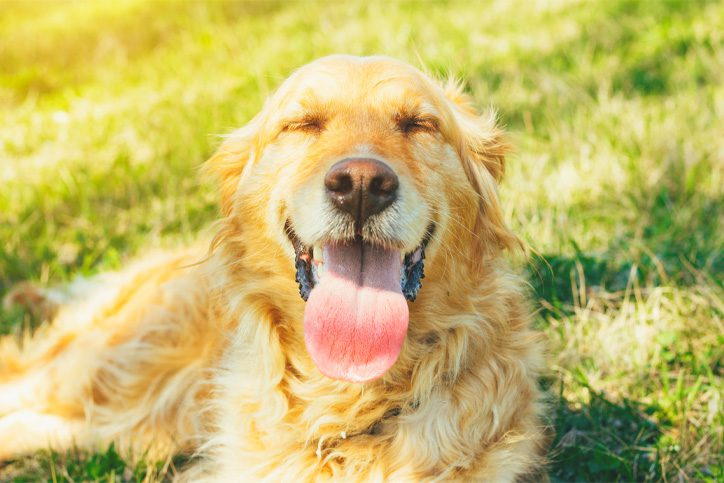
Why My Dog's Calorie Needs Collapsed During Portland's Heat Dome—And I Didn't Notice for a Week
Megan O'Connor
I was filling my dog Baxter's bowl on a Tuesday evening when I realized he hadn't finished his breakfast. At all. The kibble sat in the bowl, untouched, the oils starting to turn rancid in the 88-degree heat of my kitchen. Baxter, a seventy-pound golden retriever who normally inhales his food like it's his last meal on Earth, was lying on the bathroom tile, panting softly, looking at me with eyes that said "not now, human." I checked the date on the food bag. Fresh. I checked his water bowl. Full. I checked his gums. Pink. But something was wrong. And it took me three more days to figure out that the problem wasn't Baxter's appetite. It was the heat. And the heat was changing everything about how many calories he actually needed.
I've had dogs my whole life. I grew up in Portland with a Lab named Gus who would run for miles in any weather. Rain, shine, fog, whatever. Gus didn't care. I assumed Baxter was the same. He's a golden retriever. They're built for activity. But Baxter was built for activity in a Portland that topped out at 78 degrees in August. Not a Portland that hit 102 degrees for three consecutive days in July 2026. The heat dome that settled over the city didn't just make him uncomfortable. It fundamentally altered his metabolism, his energy expenditure, and his nutritional needs. And I, his devoted owner, missed it completely because I was still measuring his food with a scoop designed for a different climate.
Here's what happens to a dog's calorie needs in extreme heat that nobody warned me about. Dogs don't sweat through their skin like humans. They pant. They have sweat glands only in their paw pads. Their primary cooling mechanism is evaporative heat loss through the respiratory system, which means they're constantly moving air across moist surfaces in their mouth and throat. That process requires energy. A lot of energy. Panting increases a dog's metabolic rate by 10 to 15 percent just to maintain thermoregulation. But here's the paradox: while their metabolic rate increases, their total daily energy expenditure often decreases because they can't exercise. The heat forces them to be sedentary. So you have a dog whose body is burning more calories at rest but whose overall activity has dropped by 60 to 70 percent. The net result is usually a lower total daily requirement. Baxter's normal maintenance was about 1,750 calories per day. During the heat wave, he needed closer to 1,400. I was feeding him 1,750. And he was leaving 350 calories in the bowl every day because his body was telling him he'd had enough.
I didn't know any of this until I called my vet. I thought Baxter was sick. I thought he was developing some kind of gastrointestinal issue. I thought maybe he'd eaten something in the park and had a partial obstruction. The vet asked me about the weather. I told her about the heat dome. She asked me about his exercise. I told me we'd been walking at 5 AM instead of 6 PM because it was cooler. She asked me how long the walks were. I told her twenty minutes instead of our usual hour. She asked me about his panting. I told me he panted constantly, even indoors. She said, "He's not sick. He's hot. And you're overfeeding him." She explained that overfeeding in heat is actually dangerous. The digestive process generates heat. When a dog eats a large meal, blood flow diverts to the stomach and intestines, which reduces the blood available for skin cooling. A dog who's already struggling to stay cool doesn't need a digestive marathon on top of a thermoregulatory marathon. Baxter was leaving food in the bowl because his body was protecting him from heat stress. And I was worried he was dying.
The exercise collapse was the hardest part to accept. Baxter lives for his walks. He knows the word "park." He does a spinny dance when I pick up the leash. But in the heat wave, the park was a danger zone. The pavement temperatures were reaching 135 degrees. At 125 degrees, skin destruction can occur in sixty seconds. At 135 degrees, it's faster. I tested the pavement with the back of my hand. I couldn't hold it for more than three seconds. And yet I was still trying to walk Baxter because I thought he needed the exercise. I thought a tired dog was a good dog. I didn't know that a heat-exhausted dog is a dead dog. We cut the walks to early morning only. Ten minutes. Grass only. No pavement. And even then, Baxter would come home panting for an hour. His calorie burn from exercise went from about 400 calories per day to maybe 80. That's a 320-calorie deficit in his expenditure. But I was still feeding him like he was running five miles a day.
I started weighing his food. Actually weighing it. Not using the scoop. A kitchen scale. Grams. His new target during the heat wave was 1,400 calories, split into two meals of 700 each. I added water to his kibble to increase hydration and reduce the thermic effect of digestion. I switched to a lower-fat formula because fat has a higher heat of digestion than carbohydrate or protein. I fed him at 6 AM and 7 PM, the coolest times of the day. And I started monitoring his body condition score weekly instead of monthly. The vet taught me the rib test: you should be able to feel the ribs with slight pressure, but not see them. Baxter was at a 5 out of 9. Perfect. During the heat wave, he dropped to a 4.5. Not alarming, but a trend. I adjusted up slightly to 1,450. He stabilized. It was a constant calibration. A dance between heat, activity, appetite, and body condition. And I was learning the steps in real time while my dog's health hung in the balance.
The wildfire smoke added another layer. Portland's air quality in late June was atrocious. The PM2.5 levels were hazardous for humans, which meant they were dangerous for dogs. Dogs have faster respiratory rates than humans. They process more air per pound of body weight. And they exercise closer to the ground, where particulate matter concentrates. I stopped taking Baxter to the park entirely on the worst days. We played indoor games. Hide and seek. Tug of war in the hallway. Training drills in the living room. But indoor play burns fewer calories than outdoor running. Maybe 100 calories instead of 400. So his total expenditure dropped even further. And his calorie needs dropped with it. I was chasing a moving target, and the target was getting smaller every day as the heat and smoke forced us indoors.
I started talking to other dog owners at my vet's office. The woman with the border collie told me her dog had gained four pounds in three weeks because she was still feeding pre-heat-wave portions while her exercise had collapsed. The man with the bulldog said his dog had stopped eating entirely for two days and he'd panicked. The vet tech told me they'd seen five cases of heat-related appetite suppression that week alone. "It's the new normal," she said. "We tell people to cut food by twenty percent in heat waves. Most people don't listen. They think their dog is sick." I was one of those people. I thought my dog was sick. He wasn't. He was just hot. And I was making him hotter by feeding him too much.
The thing that really gets me is how little practical advice exists for this. The dog food bags say "feed based on activity level." They don't define activity level. They don't say "reduce by twenty percent when the heat index is over 90." They don't say "avoid exercise on pavement over 120 degrees." They don't say "panting increases metabolic rate but reduces total expenditure." They give you a chart with weight ranges and vague activity descriptors. "Active." "Less active." What does that mean when it's 102 degrees and your dog can't go outside? The pet food industry, like the human fitness industry, is built on assumptions about environmental stability that no longer hold. And the dogs are paying the price in obesity, heat stress, and confused owners who don't know why their perfectly healthy dog won't eat.
Baxter is fine now. The heat broke. The smoke cleared. He's back to his 1,750-calorie diet. He's back to his hour-long walks. He's back to inhaling his food like a vacuum cleaner. But I've changed. I bought a thermometer for the kitchen. I check the pavement before every walk. I have a heat protocol: shorter walks, lower calories, more water, indoor play. And I pay attention to his appetite as a signal, not a problem. If he leaves food in the bowl, I don't panic. I check the temperature. I check his activity. I adjust. Because I've learned that a dog's body is smarter than the feeding chart on the bag. And in a heat wave, the smartest thing you can do is listen to what your dog is telling you.
So here's my advice. If it's over 85 degrees, cut your dog's food by fifteen to twenty percent. If you can't walk them for more than fifteen minutes, cut by another ten percent. Add water to their meals. Feed at the coolest times of day. Check the pavement with your hand. And if they leave food in the bowl, don't force it. They're not being picky. They're being smart. Their body knows what it needs. And what it needs in a heat wave is less food, more water, and an owner who understands that climate change has changed the rules of dog ownership.
How are you adjusting your dog's diet in the heat? Because I'm starting to think we need a Portland Dog Heat Safety Network. And Baxter is willing to be the mascot.
The thing that really broke my heart was watching Baxter try to play. He'd pick up his favorite tennis ball, take three steps toward the door, then stop. Look at me. Look at the door. Drop the ball. And walk back to the bathroom tile. He wanted to play. He wanted to run. He wanted to be the dog he always was. But his body wouldn't let him. The heat had stolen his joy. And I had stolen his relief by overfeeding him, making his digestive system work overtime when all his body wanted to do was cool down. I felt like a failure. Not because I didn't love him. But because I didn't understand him. I didn't understand that his needs had changed. That the climate had changed. That the rules of dog ownership I had learned from my childhood no longer applied.
I started researching canine thermoregulation more deeply. Dogs have a normal body temperature of 101 to 102.5 degrees Fahrenheit. That's higher than humans. They can tolerate slightly higher ambient temperatures, but only up to a point. The thermoneutral zone for dogs—the range where they don't have to expend energy to maintain body temperature—is between 60 and 75 degrees for most breeds. Golden retrievers, with their thick double coats, are on the lower end of that range. Baxter's coat is beautiful. It's golden and flowing and soft. And in 100-degree heat, it's a blanket. A fur blanket that his body can't take off. He was walking around in a down jacket in a sauna. And I was wondering why he didn't want to eat.
The vet told me about something called "summer shutdown" in dogs. It's not a medical term. It's a descriptive one. In extreme heat, dogs' bodies shut down non-essential functions. Appetite decreases. Activity decreases. Social interaction decreases. They're not depressed. They're not sick. They're conserving energy. Surviving. And the owner's job is to support that shutdown, not fight it. That means less food. Less exercise. More rest. More water. And patience. Lots of patience. Because the dog you had in April is not the dog you have in July. And that's not the dog's fault. It's the climate's fault.
I started a journal. For Baxter. I know, I know. But it helps. I track the daily high temperature. His food intake in grams. His water intake. His activity level. His body condition score. His mood. After three weeks, I can see the patterns. At 75 degrees, he eats 1,750 calories and runs for an hour. At 85 degrees, he eats 1,600 and walks for thirty minutes. At 95 degrees, he eats 1,400 and moves only to change tiles. At 100 degrees, he eats 1,200 and doesn't move at all. It's a sliding scale. And the scale is determined by the thermometer. Not by his health. Not by his age. Not by his personality. Just by the heat. And once I saw that pattern, everything clicked. I wasn't failing him. The climate was failing him. And my job was to adapt to the climate, not to pretend it didn't exist.
I'm not giving up on Baxter's health. I'm not letting him become obese. I'm not letting him become malnourished. I'm finding the balance. The sweet spot where he gets enough calories to maintain his muscle and his coat and his spirit, but not so many that his digestive system overwhelms his cooling system. It's a tightrope. And I'm walking it every day. With a thermometer in one hand and a kitchen scale in the other. Because that's what dog ownership looks like in 2026. It's not just love and walks and belly rubs. It's science. It's adaptation. It's constant vigilance. And it's worth it. Because when the heat breaks and Baxter picks up his tennis ball and actually makes it to the door, the look in his eyes is pure joy. And I get to be the person who helped him survive long enough to feel that joy again.
