Let me tell you about the most boring afternoon of my life.
It was raining. Portland in March. Shocker. I was in the dog food aisle at Natural Pet Food Solutions on SE Hawthorne. My knees were starting to hurt from crouching. I had a notebook, a calculator, and a mission.
I was going to calculate the exact calorie content of every bag of kibble in that store.
Why? Because I was angry. A client had told me she was feeding her dog "one cup" of food. I asked her to measure it. She did. Her "one cup" was 1.4 cups. Because she was using a coffee mug. Not a measuring cup. A coffee mug. And her coffee mug held 1.4 cups of kibble. So she was overfeeding by 40 percent. And she had no idea.
I wanted to know: is this a common problem? Are all measuring cups wrong? Are all dog food bags lying? What is the truth?
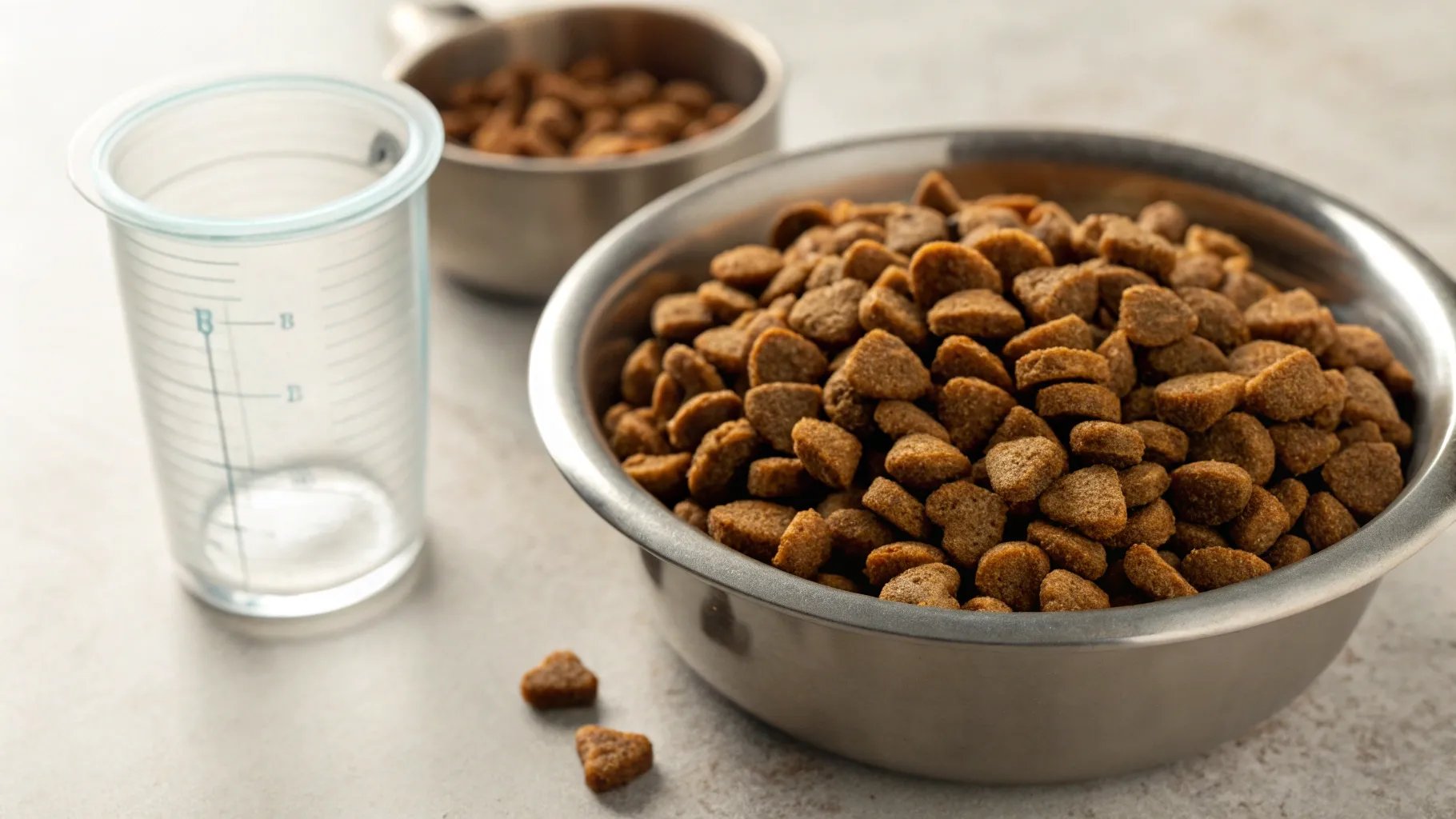
I spent four hours in that aisle. I measured 23 brands of kibble. I used a standardized measuring cup. I leveled it off. I weighed each cup on a digital scale. I recorded the weight. I calculated the calories per cup based on the guaranteed analysis. And I found something that made me want to scream.
The "cup" on the dog food bag is not a standard cup. It's a marketing cup. Some brands define a cup as 8 ounces. Some as 9. Some as 10. One brand — I'm not naming names, but it's a popular one with a golden retriever on the bag — defines a cup as 12 ounces. Twelve. That's 50 percent more than a standard cup. So when the bag says "feed 2 cups per day," they mean 2 of their cups. Which is 3 standard cups. Which is 50 percent more food than you think you're feeding.
I called the company. I asked them about their cup measurement. They told me it was "an approximate guideline." Approximate. A guideline. For a living being's daily nutrition. Approximate.
I was furious. I am still furious. Because this isn't a mistake. This is intentional. The bag says "2 cups" because it sounds reasonable. It sounds manageable. It sounds like a normal amount of food. But it's not 2 cups. It's 3. And your dog is getting 50 percent more calories than the bag implies. And gaining weight. And developing diabetes. And dying early. Because of a "guideline."
So here's what I tell every client now. Throw away the measuring cup. Buy a kitchen scale. A $15 digital scale from Amazon. Weigh the food in grams. Every single day. Because grams don't lie. Grams don't change. Grams don't have marketing departments. 100 grams is 100 grams. Every time. Forever.
I weighed Murphy's food this morning. 85 grams. Exactly. Same as yesterday. Same as tomorrow. Because I use a scale. Because I don't trust cups. Because I don't trust bags. Because I trust numbers. And numbers don't have golden retrievers on them.
—Megan (currently on my third cup of coffee because writing this made me tired)
Let me tell you about the client who made me write this article. Her name was Jennifer. She had a 50-pound Lab named Cooper. Cooper was 10 pounds overweight. Jennifer was feeding him "one cup" of kibble per meal. Two meals per day. So two cups total. Right?
Wrong. Jennifer was using a coffee mug. A big one. The kind you get at Starbucks. The kind that holds 16 ounces. And she was filling it to the brim. Leveling it off with her finger. And calling it "one cup."
I asked Jennifer to bring her mug to the clinic. She did. I filled it with her kibble. I weighed it. 1.7 cups. Not 1. Not 1.5. 1.7. She was feeding Cooper 3.4 cups per day. When the bag said 2 cups. She was overfeeding by 70 percent. And she had no idea. Because she thought a coffee mug was a cup. Because the bag said "cup." And a mug is a cup. Right?
Wrong. A cup is 8 fluid ounces. A measuring cup. A standardized, leveled, exact measuring cup. Not a coffee mug. Not a soup bowl. Not a handful. A measuring cup. And even then, I don't trust it. Because kibble density varies. One cup of one brand might weigh 90 grams. One cup of another might weigh 120 grams. That's a 33 percent difference. In the same volume. In the same "cup."
I tell every client: throw away the cup. Buy a scale. A $15 digital scale. Weigh the food in grams. Every day. Every meal. Every time. Because grams don't lie. Grams don't change. Grams don't have marketing departments. 100 grams is 100 grams. Forever.
Jennifer bought a scale. She started weighing Cooper's food. 85 grams per meal. 170 grams per day. Exactly. Cooper lost 8 pounds in 6 months. Jennifer called me last week. "I can't believe I was overfeeding him by 70 percent," she said. "I thought I was being careful."
She was being careful. She was trying. She was doing what she thought was right. But the system is designed to confuse her. The bag says "cup." The mug says "cup." The scoop says "cup." But none of them are the same. And none of them are accurate. And all of them are making dogs fat.
So here's my rule. My hard, fast, non-negotiable rule. If you feed your dog kibble, you weigh it. Period. No cups. No scoops. No handfuls. No "about this much." You weigh it. In grams. On a scale. Every time. Because your dog's health depends on it. And your dog deserves better than "about this much."
—Megan (currently on my third cup of coffee because writing this made me tired)
Let me tell you about the most expensive mistake I've ever made. I bought a "premium" measuring cup. It was $25. It had a silicone grip. It had measurement markings. It had a pouring spout. It was beautiful. And it was wrong.
I tested it against my digital scale. One cup of kibble? 95 grams. But the bag said one cup should be 100 grams. The "premium" cup was under-measuring by 5 percent. That doesn't sound like much. But over a year? That's 18 extra cups of kibble. For a 50-pound dog, that's 6,570 extra calories. That's almost 2 pounds of weight gain. From a "premium" measuring cup. That was wrong.
I threw it away. I bought a $15 digital scale. And I never looked back. Because scales don't lie. Scales don't have marketing departments. Scales don't have "premium" versions. They just weigh things. And 100 grams is 100 grams. Every time. Forever.
So here's my final word on cups. Throw them away. All of them. The plastic ones. The metal ones. The silicone ones. The "premium" ones. The ones with spouts. The ones with grips. The ones with measurement markings. Throw them all away. Buy a scale. Weigh the food. In grams. Every time. Because your dog deserves accuracy. And accuracy doesn't come from a cup. It comes from a scale.
—Megan (currently on my third cup of coffee because writing this made me tired)