I'm going to say something that might make some of you mad.
Free feeding — leaving a bowl of kibble out all day so your dog can eat whenever — is the fastest way to an obese dog. I will die on this hill. I have the data. I have the cases. I have the tears of a hundred clients who said, "But he only eats when he's hungry."
No. He doesn't. Dogs are not humans. They don't have the same satiety signals. They don't have the same self-regulation. When food is available, they eat. It's evolutionary. In the wild, food is scarce. When you find it, you eat it. All of it. Because you don't know when you'll find more. Your dog's brain is still wired that way. The bowl is never empty, but their brain says, "Eat now. Eat fast. Eat everything."
I had a client named Karen. She had a 45-pound corgi named Waffles. Waffles was shaped like a loaf of bread. Karen insisted Waffles was "not a big eater." I asked how she fed him. "I leave a bowl out," she said. "He eats when he's hungry."
I asked her to measure the food for one week. Just measure it. Don't change anything. Just measure. She called me five days later, crying. "He's eating four cups a day," she said. "Four cups. I thought he was eating one."
Waffles needed 700 calories per day. His kibble was 350 calories per cup. Four cups? 1,400 calories. Double his needs. Karen had been free feeding him for three years. Waffles had gained 15 pounds. And Karen had no idea because she never measured. She just filled the bowl when it got low.
We switched to scheduled meals. Two meals per day. Measured with a scale. The bowl went away. Waffles whined for three days. He stared at the empty bowl like it had betrayed him. He followed Karen around the house, begging. Karen felt terrible. She wanted to give in. She wanted to fill the bowl. "He's hungry," she said.
He wasn't hungry. He was bored. He was anxious. He was habituated to constant grazing. And habits take time to break. After a week, Waffles stopped whining. After two weeks, he started eating his meals with enthusiasm instead of grazing. After three months, he had lost 8 pounds. After six months, he could run. After a year, he was at his ideal weight. And Karen said, "I can't believe I ever free fed him."
Free feeding doesn't just cause obesity. It causes picky eating. It causes food aggression. It causes anxiety. When food is always available, it's not valuable. Dogs become bored with it. They hold out for something better. They graze instead of eating meals. And when you try to switch to scheduled meals, they panic because their security blanket — the always-full bowl — is gone.
Scheduled meals are better for every dog. Every single one. Two meals per day. Measured. Given at the same time. Removed after 20 minutes if not finished. This teaches dogs that food is valuable. That they should eat when it's offered. That they don't need to panic. And it gives you control over their calorie intake. Which is the only way to manage their weight.
So if you're free feeding, stop. I know it's convenient. I know your dog seems happy. I know it's what you've always done. But it's making your dog fat. And it's making your life harder. Switch to scheduled meals. Measure the food. Be consistent. Your dog will adapt. And they'll be healthier for it.
—Megan (currently on my third cup of coffee because writing this made me tired)
Let me tell you about the science behind why free feeding fails. Dogs are opportunistic feeders. In the wild, they eat when food is available because they don't know when the next meal will come. This is hardwired into their DNA. When you leave a bowl out all day, you're triggering that ancient instinct. "Eat now. Eat fast. Eat everything. Because it might be gone soon."
But the bowl isn't going anywhere. So they eat. And eat. And eat. Until they're stuffed. And then they sleep. And then they wake up and eat again. They're not eating because they're hungry. They're eating because the food is there. It's not satiety. It's opportunity.
I had a client named Michael. He was a software engineer. Very logical. Very data-driven. He free fed his 60-pound pit bull, Rocky, because "it seemed natural." I asked him to log Rocky's food intake for a week. Michael was skeptical but agreed. He called me on day three, stunned. "Rocky is eating 5 cups a day," he said. "I thought he was eating 2."
Rocky needed 900 calories per day. His kibble was 380 calories per cup. Five cups? 1,900 calories. More than double his needs. Michael had been free feeding Rocky for two years. Rocky had gained 20 pounds. And Michael, the data-driven engineer, had never measured.
We switched to scheduled meals. Two meals per day. Measured with a scale. Michael loved it because it was data. Exact numbers. Precise control. Rocky lost 15 pounds in 8 months. Michael started tracking everything. Weight, calories, exercise. He became the most diligent client I've ever had. And Rocky became the healthiest pit bull at the park.
Free feeding also creates behavioral problems. Dogs who graze all day become anxious when food is removed. They develop food aggression because they're always worried about losing access. They become picky eaters because food is never scarce — it's always there, so it's never special. And they lose the natural meal-time structure that helps regulate their metabolism.
Scheduled meals create predictability. Dogs know when food is coming. They eat with enthusiasm. They digest better. They sleep better. And you know exactly how much they're eating. Which means you can control their weight. Which means you can keep them healthy. Which is the whole point.
So stop free feeding. I know it's hard. I know your dog will whine. I know you'll feel guilty. But you're not being cruel. You're being kind. You're teaching them healthy habits. You're giving them structure. You're keeping them at a weight that lets them run and play and live a full life. That's love. That's real love. And it starts with putting the bowl away.
—Megan (currently on my third cup of coffee because writing this made me tired)
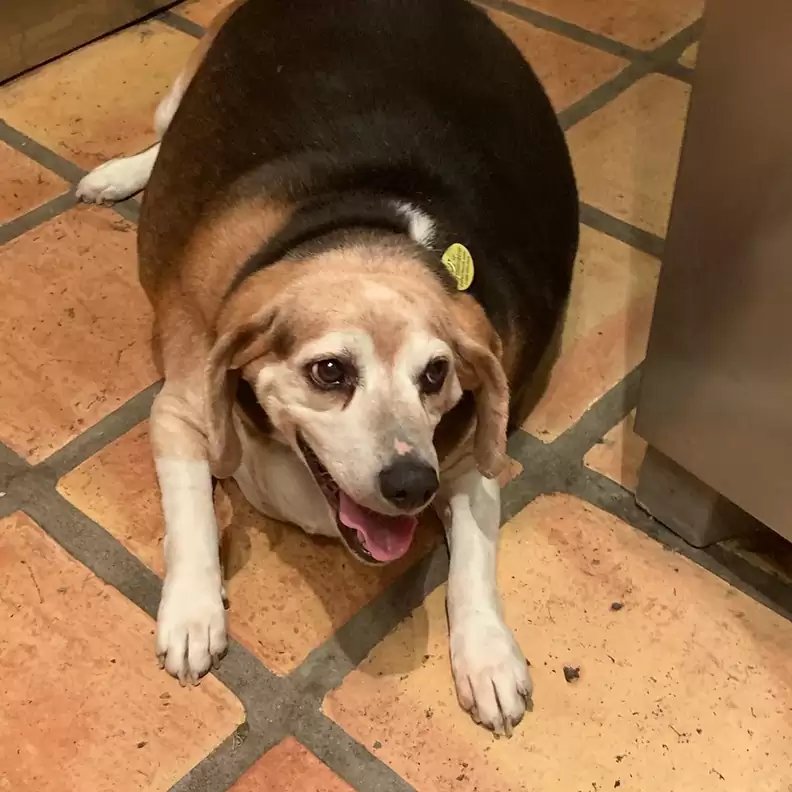
Let me tell you about the most stubborn client I've ever had. His name was George. He was 70 years old. He had a 35-pound beagle named Biscuit. Biscuit was 10 pounds overweight. George free fed him. Had been for 8 years. "Biscuit only eats when he's hungry," George said. "He's not a big eater."
I asked George to measure Biscuit's food for one week. Just measure. Don't change anything. George was skeptical but agreed. He called me on day four. "Biscuit is eating 3.5 cups a day," he said. His voice was shaking. "I thought he was eating 1.5."
Biscuit needed 600 calories per day. His kibble was 350 calories per cup. 3.5 cups? 1,225 calories. Double his needs. George had been overfeeding Biscuit for 8 years. And he had no idea. Because he never measured. Because the bowl was always full. Because Biscuit "only ate when he was hungry."
George didn't want to switch to scheduled meals. "He's used to the bowl," George said. "He'll be stressed." I told George that stress was temporary. Obesity was permanent. And deadly. George thought about it for a week. Then he called me back. "Okay," he said. "Let's try it."
We switched Biscuit to two meals per day. Measured with a scale. George set alarms on his phone. 7 AM and 6 PM. He put the food down. He waited 20 minutes. He picked it up. Biscuit whined for two days. Then he adapted. He started eating his meals with enthusiasm. He started losing weight. After 6 months, he was down to 28 pounds. After a year, he was at his ideal weight of 25.
George called me last month. Biscuit is 12 now. He's still at 25 pounds. George still uses the scale. Still sets the alarms. Still picks up the bowl after 20 minutes. "I can't believe I ever free fed him," George said. "I was killing him with kindness."
That's the thing about free feeding. It's not malicious. It's not careless. It's kind. It's loving. It's "I want my dog to be happy." But it's making them fat. It's making them sick. It's shortening their lives. And the kindest thing you can do is stop. Measure the food. Schedule the meals. Be consistent. Your dog will adapt. And they'll live longer because of it. That's real kindness. That's real love. And it starts with putting the bowl away.
—Megan (currently on my third cup of coffee because writing this made me tired)