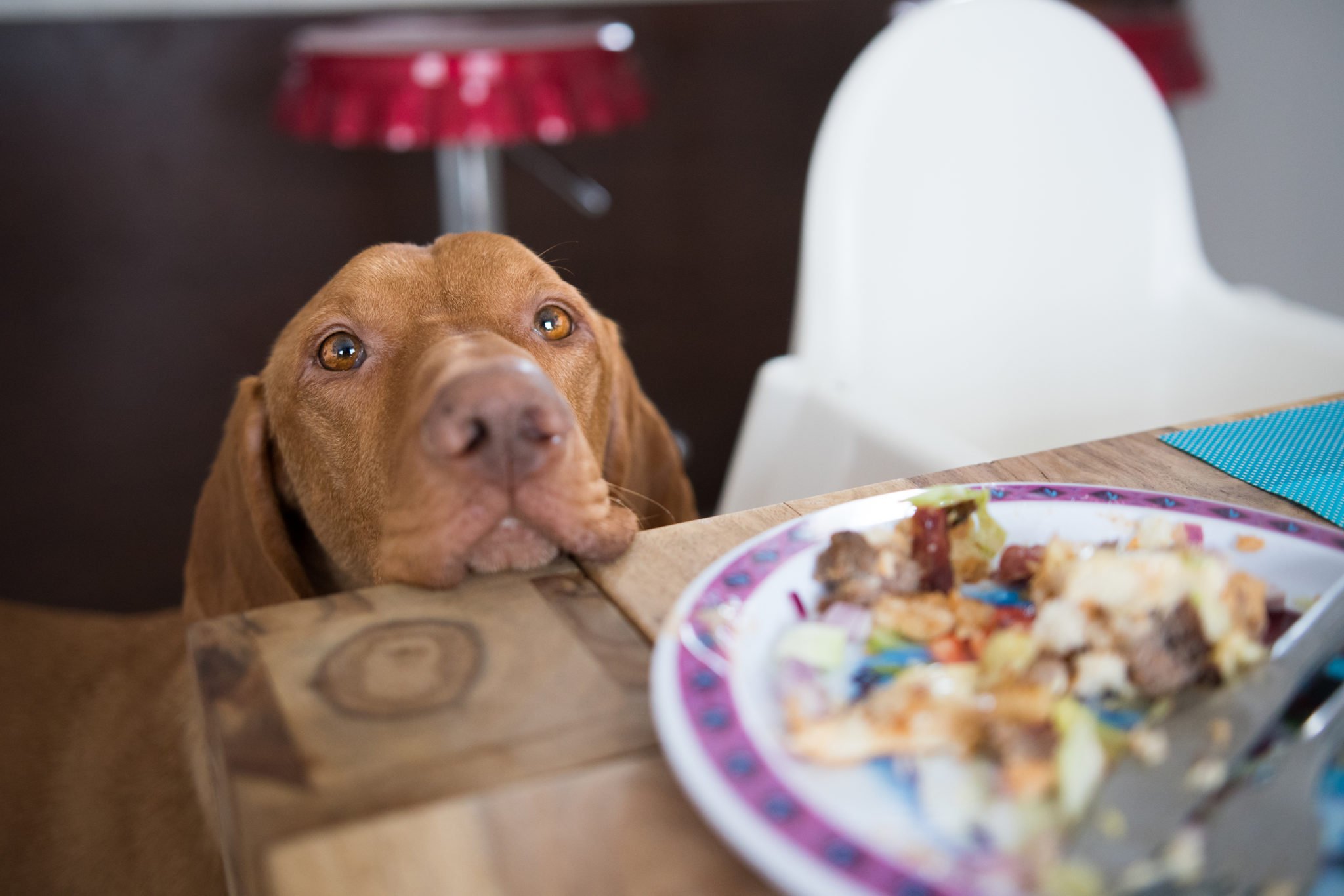
"But He Looks at Me With Those Eyes" — The Table Scrap Trap
"I can't stop giving him scraps," she said. "He looks at me with those eyes."
Her name was Debbie. Her dog was a 9-year-old dachshund named Oscar. Oscar weighed 24 pounds. He should have been 16. His back was starting to curve in that way dachshund backs do when they're carrying too much weight. His vet had warned her about IVDD — intervertebral disc disease — the condition that paralyzed dachshunds and cost their owners $8,000 in surgery. Debbie was terrified. But she was also feeding Oscar bacon under the table.
I didn't judge her. I don't judge anyone who comes to me for help. I've been a certified pet nutrition consultant for ten years, and I've managed a veterinary clinic in Portland for six of them. I've seen every version of this story. The golden retriever who gets pizza crusts. The lab who finishes the kids' cereal. The pug who gets a "just a little bit" of ice cream every night. It's never about the food. It's about love. And guilt. And the human need to make our animals happy even when it's killing them.
Debbie and I sat down with a calculator. Oscar needed 340 calories a day to maintain his ideal weight. His kibble was 380 calories per cup. She was feeding him one cup a day. So far, so good. Then we added the scraps. Two pieces of bacon in the morning: 86 calories. A crust of bread at lunch: 40 calories. A spoonful of rice with dinner: 60 calories. A "few" dog treats during the day: 120 calories. A lick of ice cream at night: 50 calories.
Total: 736 calories. More than double what he needed.
Debbie stared at the number. "But it's just a little bit," she whispered. "It's not like I'm feeding him a whole meal."
I nodded. "I know. But Oscar is 16 pounds of dog. His stomach is the size of a tennis ball. That 'little bit' is 50% of his daily intake. It's like you eating 3,000 calories of snacks on top of your regular meals and wondering why your pants don't fit."
She laughed. Then she cried. Then she said, "What do I do?"
We made a plan. Not a diet. I hate the word diet when it comes to dogs. It sounds like punishment. We made a feeding plan. Oscar's kibble stayed the same: one cup, 380 calories. But we replaced the scraps with low-calorie alternatives. Carrot sticks instead of bacon. Green beans instead of bread. One small treat instead of five. And the ice cream? We switched to frozen plain yogurt, one tablespoon, 20 calories. Total daily intake: 420 calories. A deficit of 316 calories. Enough for steady, safe weight loss.
The hardest part wasn't the food. It was the eyes. Oscar's eyes. Those big, brown, manipulative dachshund eyes that said "I love you and I know you have cheese in your hand." Debbie had to learn to say no. To redirect. To give him a carrot and a belly rub instead of a piece of bacon. It felt mean. It felt like denying love. But love, when it comes to dogs, is not about giving them what they want. It's about giving them what they need.
I know this because I did the same thing with Murphy. My golden retriever. My first dog. The one I overfed for eight months because I didn't measure his food. Because I thought I knew what I was doing. Because he looked at me with those eyes. Murphy gained 8 pounds. I noticed when he started hesitating before jumping on the couch. When his breathing got heavier on walks. When the vet showed me the weight chart and I saw the line creeping up like a warning.
I fixed it. I measured. I tracked. I said no. And Murphy lost the weight. Not because he's special — though he is — but because I stopped letting guilt drive my feeding decisions. I started letting data drive them instead.
Debbie called me last month. Oscar was down to 21 pounds. His back was straighter. He was running in the yard again. She had stopped feeding him from the table — mostly. She still gave him a green bean on Sundays. "He thinks it's a treat," she said. "And honestly? So do I."
That's the secret. The dogs don't know the difference between a green bean and a piece of bacon. They just know you're giving them something. They know you love them. And if you give them the right something — the thing that keeps them healthy and mobile and alive for more years — that's the real love. That's the love that matters.
If you're feeding table scraps, I get it. I really do. Those eyes are powerful. But measure what you're giving. Count the calories. Look at the total. And ask yourself: am I loving my dog, or am I slowly hurting them? Because the answer might surprise you. And the fix might be simpler than you think.
— Megan, from a kitchen in Portland where the treats are measured and the love is unlimited
P.S. Murphy and Scout approve of this message. They also approve of carrots. But mostly they approve of dinner being on time.
