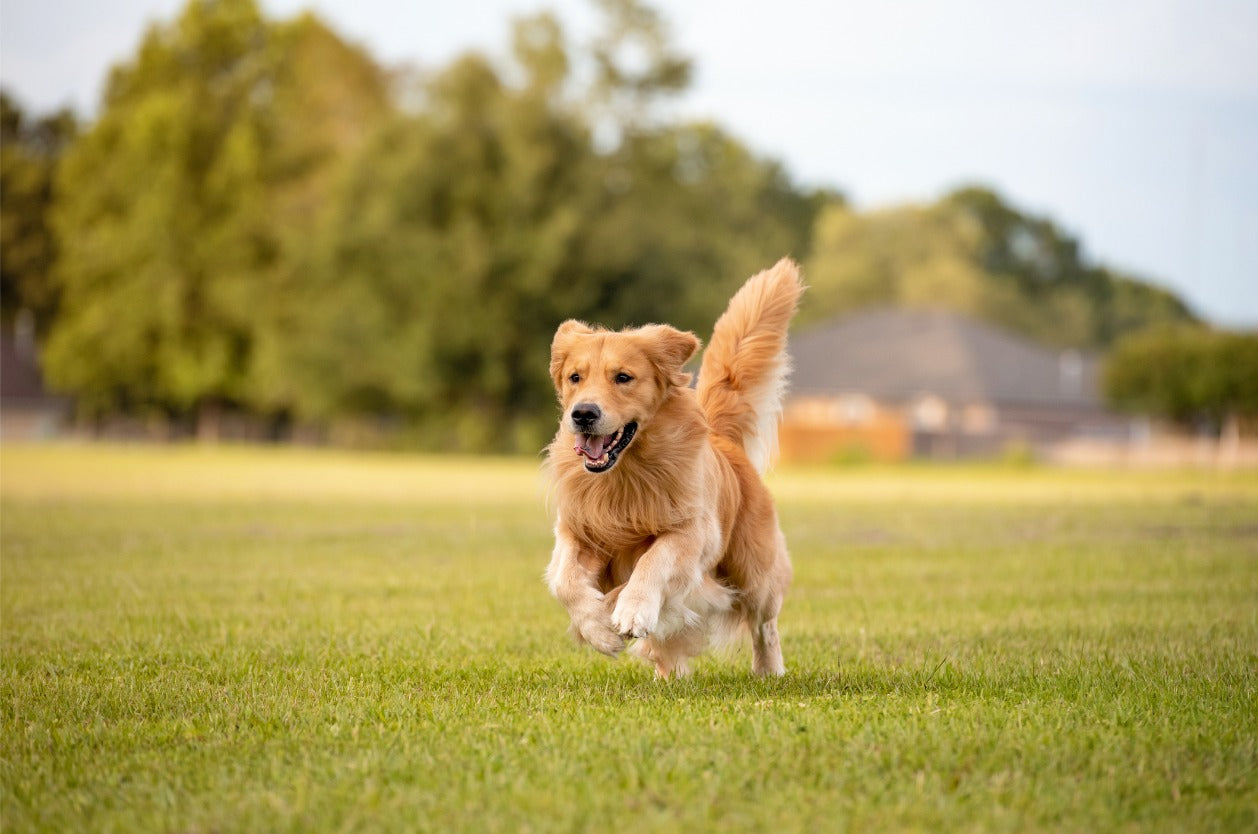
Murphy's Winter Weight Gain and My Guilt Trip to the Dog Park
I stood on the scale at the vet clinic holding Murphy's leash, and I already knew what Dr. Patel was going to say. Murphy had gained 4.2 pounds since October. Four pounds on a golden retriever does not sound like much. But Murphy is not a large golden. He is on the smaller side — 65 pounds at his ideal weight. And 69.2 pounds is not 65 pounds. It is the difference between "healthy" and "we need to talk."
The Portland winter had been brutal. Not brutal by Midwest standards — I grew up in Chicago, so I know what real winter looks like. But brutal by dog exercise standards. It had rained for 23 days in January. The trails at Forest Park were mud pits. The sidewalks were slick. And I had stopped walking him. Not completely. But enough. Our 45-minute morning walks had become 15-minute bathroom breaks. Our weekend hikes had become Netflix weekends. And Murphy, being a golden retriever, had responded to the reduced activity by eating the same amount of food he had been eating when he was burning 400 more calories per day.
The math was simple. I just had not done it.
Dr. Patel was kind. She always is. She said, "Megan, you know what I am going to say." I said, "I know." She said, "He needs fewer calories or more exercise. And in Portland in February, fewer calories is easier than more exercise." She was right. I could not control the rain. But I could control the kibble.
I went home feeling guilty. Not just guilty. Ashamed. I am a Certified Pet Nutrition Consultant. I have written articles about seasonal weight gain in dogs. I have warned clients about the "Portland winter chub." And I had fallen into the exact trap I warn against. I had been feeding Murphy for the dog he was in July — active, hiking, swimming in the Willamette — instead of the dog he was in January — couch-bound, rain-avoidant, and slightly depressed about the lack of squirrels.
Scout, our terrier mix, was fine. She is 4 years old and has the metabolism of a hummingbird. She can gain and lose weight in the same week. Murphy is 7. His metabolism has slowed. His joints are starting to show early signs of wear. And the extra 4 pounds were putting unnecessary stress on his knees and hips. Golden retrievers are already prone to hip dysplasia. I was not helping.
I made the adjustment that afternoon. I pulled out the kitchen scale — the same one I tell every client to use — and I weighed Murphy's food. He had been getting 3.5 cups of kibble per day. At 380 calories per cup, that was 1,330 calories. His RER — resting energy requirement — for his ideal weight of 65 pounds was 1,020 calories. With an activity factor of 1.4 for a moderately active indoor dog, his MER — maintenance energy requirement — should have been 1,428 calories. But he was not moderately active. He was sedentary. His actual activity factor was closer to 1.2. That meant he needed 1,224 calories. I was feeding him 106 calories per day too many. Over 90 days of winter, that is 9,540 extra calories. Roughly 2.7 pounds of fat. The rest was probably reduced activity burning fewer calories, which made the surplus even worse.
I cut him to 3 cups per day. A 14% reduction. Not dramatic. Not starvation. Just appropriate for his current activity level. I also added a joint supplement with glucosamine and chondroitin — not for weight loss, but because the extra weight had been hard on his joints and I wanted to support them while he lost it.
The guilt trip to the dog park happened the next Saturday. It was one of those rare February days when the sun comes out and every dog owner in Portland suddenly remembers they have a dog. The park was packed. Murphy ran for maybe ten minutes, then he slowed down. He was panting harder than usual. He was carrying extra weight, and he felt it. I watched him wade into the Columbia River — his favorite thing — and he could not swim as long as he usually does. He came back to shore early and shook himself off with a look that said, "I am not what I used to be."
That was the moment I stopped feeling guilty and started feeling determined. Guilt is useless. It does not burn calories. It does not add miles. It just sits in your chest and makes you feel bad while your dog gains weight. Determination is different. Determination says: I made a mistake, and I am going to fix it.
I started walking him in the rain. I bought him a Ruffwear jacket so he would not get soaked. I bought myself a better raincoat so I would not get soaked. We walked 30 minutes every morning, rain or shine. On the really bad days, we did indoor fetch in the hallway. On the good days, we went to the dog park and I threw the ball until my shoulder hurt.
By March, he had lost 1.8 pounds. By April, he was back to 66.5. By May, he was 65.2 — essentially at his ideal weight. And the best part was not the number on the scale. It was the dog. He was running faster. He was swimming longer. He was jumping into the car without the hesitation that had started last winter. He was Murphy again.
I learned something I already knew but needed to relearn: dogs do not gain weight because they are lazy. They gain weight because we feed them for the dogs they used to be, not the dogs they are now. Seasonal activity changes are real. Weather matters. And the food bowl does not adjust itself. You have to do the math. You have to weigh the food. You have to look at your dog honestly and ask: is this the right amount?
Murphy and Scout approve. Especially Murphy. Because being lean means more squirrels chased, more rivers swum, and more years of being the dog he was meant to be.
— Megan, from Portland, where the rain is endless and the dog food portions are finally seasonal.
